Honey Fungus - Treatment & Control
Our site is reader supported, this means we may earn a small commission from Amazon and other affiliates when you buy through links on our site.
What is Honey Fungus?
Honey fungus is a fungal disease known as fungus Armillaria. However, there are several different species, and it spreads underground through root systems. The bad news is that there is no treatment, but you can do a few things to help prevent it. Honey fungus is actually quite common and usually affects trees, other woody plants and even perennials. These include Birch trees, buddleia, California lilacs, Forsythia, and the list goes on.
It attacks and kills the roots and lower stems of plants. It’s not fussy about which plants it goes after and is one of the more destructive plant diseases in the UK. That being said, some plants are more suspectable than others to honey fungus so planting those resistant plants such as Hypericum, Buxus, Vaccinium, Chaenomeles, and Garrya to name a few can be a good way to help prevent it.
How to recognise Honey Fungus?
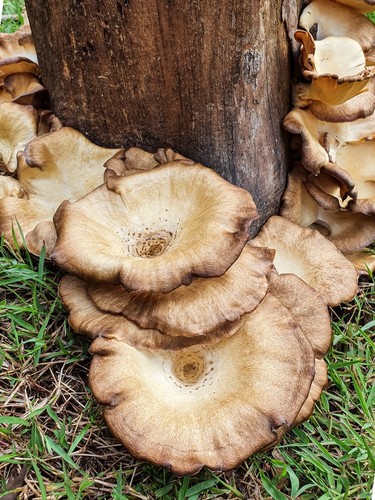
As this fungal disease starts underground, you may not notice any symptoms until it’s firmly established. If the conditions are right, you may notice honey coloured mushrooms on the lower part of the main trunk of the plant, but it’s important to know that you are more likely not to see mushrooms. What you usually notice first is the top growth, wilting or dying back, sometimes slowly. You will then notice a white substance between the bark and wood but lower down towards the base, usually at ground level. This is usually the big giveaway that is infected with honey fungus.
More obvious signs may be that the leaves of your plant are smaller than expected too, no flowers bloomed and that the bark of the trunk is cracking. This is what you usually notice first.
What to do about it?
Prevention
Prevention of honey fungus is difficult, once you have it the only way to help stop the spread is to build a physical barrier in the soil to separate the infected area. You can use a thick plastic sheet and use it to create a barrier by burying it vertically about 50cm (20 inches) deep. This will help stop the spread. You can also. Some people have also been successful in reducing the spread by breaking up rhizomorphs by cultivating the soil deeply. I also recommend planting plants that have shown good resistance to honey fungus which the RHS has a list with
What to do with affected plants
Dig up the damaged plant straight away making sure to get all the roots. Then burn the plant in a garden incinerator. DO NOT put the plant on the compost heap as the honey fungus spreads easily and you don’t want to reintroduce it to your garden.
Remove the soil surrounding the hole where the plant was and replace it with clean, fresh soil.